
Côte d'Opale
Diving on the Opal Coast
One of the densest wreck graveyards in the world, just a few miles offshore
The essentials
- Where
- Côte d'Opale
- How long
- Half a day
- Price
- Club trip or commercial dive centre
- Wrecks
- PADI Advanced recommended
- May to October
- Cold water
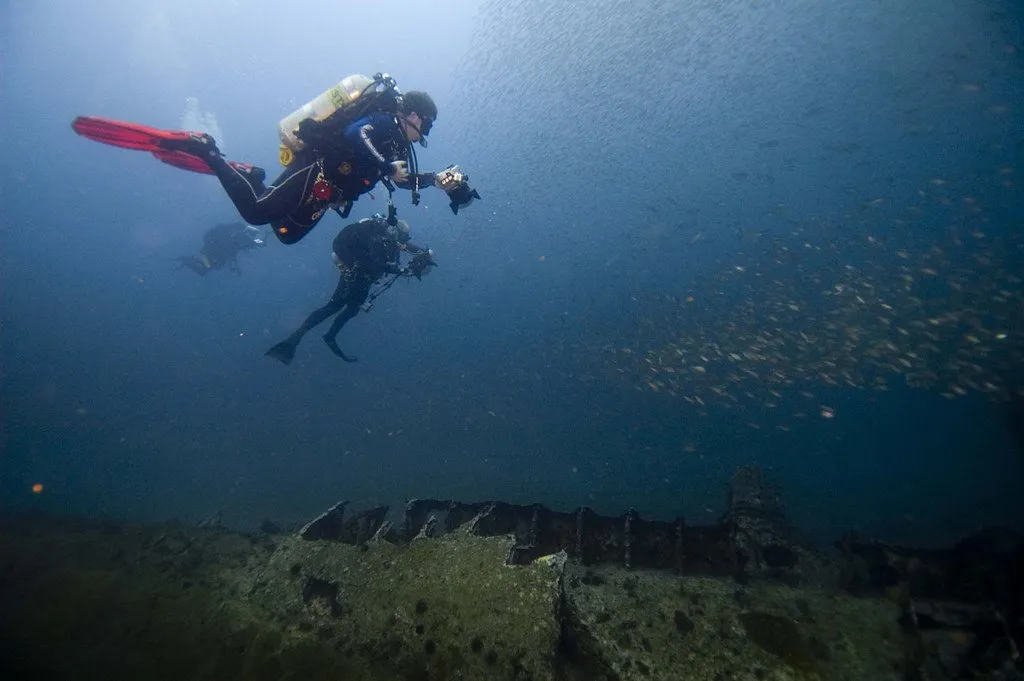
The Strait of Dover is the busiest shipping lane in the world, and has been for a very long time. Two world wars, centuries of trade and violent currents have piled up hundreds of wrecks: cargo ships, trawlers, submarines, warships.
That's what gives the site its reputation among divers — and this isn't a holiday dive. The water is cold, visibility changes from one tide to the next, and the current decides everything.
What makes diving here distinctive
- The current You only dive at slack water, that roughly hour-long window around high or low tide when the current drops to nothing. The whole plan for a trip is built around it.
- Visibility From two to fifteen metres, depending on the tide, the wind in preceding days, and the season. It can’t be forecast the day before: you go knowing you might see nothing.
- Temperature From 7°C in March to 18°C in September. A drysuit for regulars, 7 mm minimum for everyone else.
What level do you need
A try-dive happens in a pool or sheltered water, not on a wreck. For sea trips, clubs generally ask for a confirmed Open Water level for the shallower wrecks, and Advanced for most of the others — depth, current and visibility all add up.
Clubs along the coast, in Boulogne, Calais and Dunkirk, run trips from April to October depending on the weather. Last-minute cancellations are part of the deal.
Nearby

Do you know Diving? Your review
No reviews yet. Yours will be the first.
The form is unavailable at the moment. Send your review to the editors, we’ll publish it here.