
Practical
The history of Wimereux
A town born from a military port, grown into a seaside resort
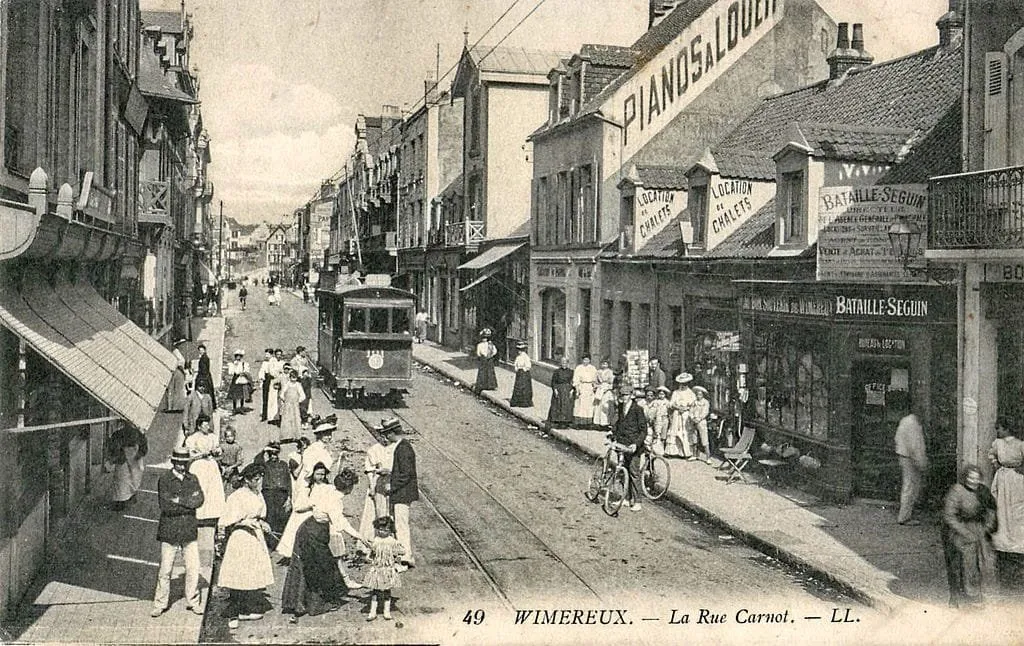
Wimereux owes its existence to Napoleon I, who had a port built here for his army as part of his plan to invade England, and its name to the river at whose mouth the town stands. Everything else — the villas, the sea wall, the beach huts — came a century later, with the railway and the fashion for sea bathing.
The Wimereux timeline
- −500 000
The first inhabitants
The oldest human traces found in Wimereux — hand axes and flints — date back 500,000 to 700,000 years. People lived here by fishing, hunting and gathering, under a warm climate.
- −20 000
The Würm glaciation
The area is gripped by the ice age, before the climate gradually warms again. The Morini, a Celtic people, then settle here and trade with the British Isles.
- Antiquité
Roman Boulonnais
After the Gallic Wars, the region is Roman for nearly three centuries and attached to Gallia Belgica. Boulogne is ravaged by invasions in the 3rd century, then rebuilt in the 4th.
- 1214
Bouvines, then the Hundred Years' War
Philip II Augustus takes back northern France at Bouvines. A long peace follows, until the Hundred Years' War: Calais becomes English until 1559.
- 1347
The Black Death
The Boulonnais is one of the hardest-hit regions: over 30% of households are affected between 1347 and 1350. A fort is built at the mouth of the Wimereux; its ruins remain visible until 1940.
- 1785
History's first air accident
It happens in Wimereux: aeronauts Pierre-Ange Romain and Jean-François Pilâtre de Rozier die there attempting to cross the Channel by balloon.
- Vers 1800
Napoleon creates the town
Napoleon I orders the building of a port for his army and a town along the river, as part of his plan to invade England. It is the founding act of Wimereux.
- 1840
Louis-Napoleon's failed landing
The future Napoleon III lands at Wimereux to attempt a coup and rally the Boulogne sur Mer garrison. The attempt fails.
- XIXe siècle
The railway, then the villas
The arrival of the railway transforms the landscape and the economy, and requires bridges to be built over the Wimereux. The town becomes the summer home of families from Paris and Lille, who build the Belle Époque villas still open to visit today.
- 1899
Wimereux becomes a commune
Until then part of Wimille, Wimereux breaks away and takes the name of the river at whose mouth it was built.
- 1899-1903
Marconi and the radio
An aerial set up at Wimereux enables a radio link with South Foreland, in England: 48 kilometres, a record for the time. Marconi carries out his tuning experiments there, the first system for protecting radio communications.
- 1945
The resort destroyed, then rebuilt
The seaside resort is partly destroyed at the end of the war. Some of the Belle Époque villas and buildings survive and are maintained today.
- 2013
Classified tourist resort
The decree of 1 August 2013 classifies Wimereux as a tourist resort. By then, the town has become both a residential suburb of Boulogne and a holiday destination for Belgians, Britons and Parisians.
What's left of it today
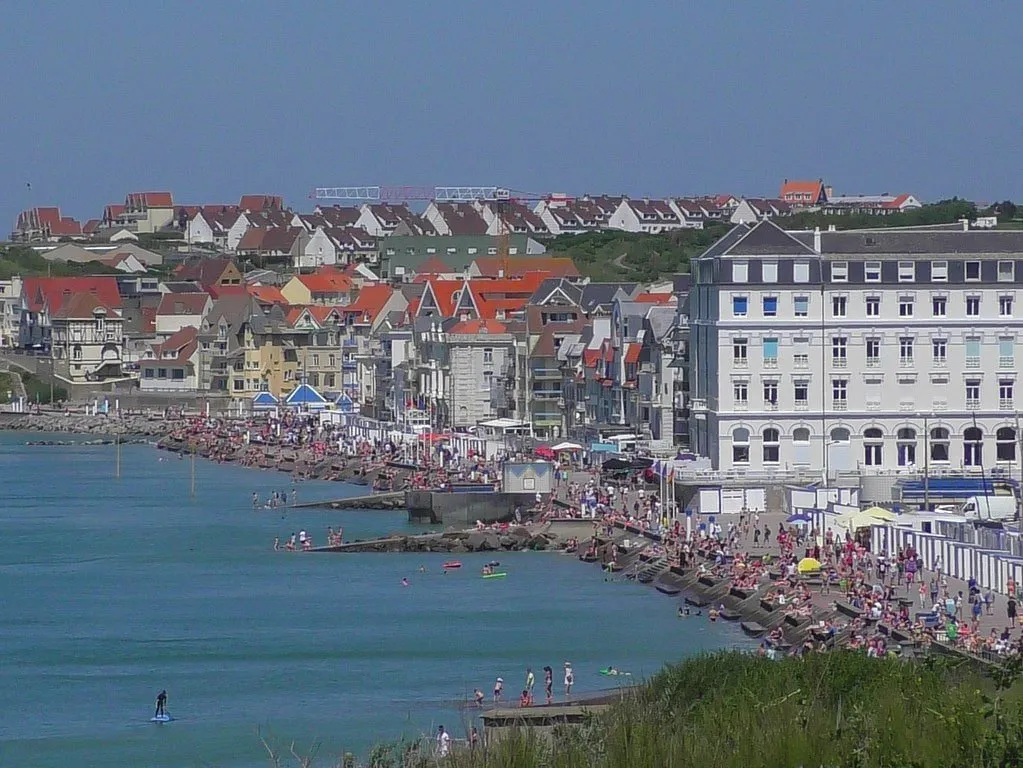
The Belle Époque villas are the most visible trace of this history: built for 19th-century industrialists and shipowners, they can be visited today on a self-guided walk, each with its own QR code telling its story. The Column of the Grande Armée, above the town, recalls the Napoleonic plan that started it all.
Our 3 restaurants
Where to eat in Wimereux?
Our favourite
For seafood, facing the sea
L'Aloze Atlantic
A seafront address, noted for its seafood platters.
Fish and seafood · Wimereux
For grilled dishes
Le Ranch
A menu of grilled dishes, with vegetarian options.
Grill restaurant · Wimereux
For a change from seafood
Le Thaï Curry
Thai cuisine, with vegan dishes.
Thai cuisine · Wimereux
Our 3 places to stay
Where to stay in Wimereux?
Our favourite
To sleep in the resort
Hôtel Saint-Jean
A hotel address in Wimereux, within walking distance of the sea wall.
Hotel · Wimereux
For a gîte with a spa
La Fenardière
A gîte with a spa and private pool.
Gîte · Wimereux
To camp near the sea
Camping l'Été Indien
The resort's campsite.
Campsite · Wimereux