
News
Discovering the lighthouses of the Opal Coast
 Anne · 4 min read
Scattered along the coastline as so many landmarks, lighthouses are an integral part of the Opal Coast's architectural heritage. Once essential to fishermen for warning of dangerous areas or spotting the entrances to seaports, these towers are now complemented by navigation and positioning equipment fitted to each vessel. Even so, lighthouses remain iconic. They draw plenty of tourists who aren't afraid to work their calves climbing the countless steps to reach the lantern room and enjoy a panoramic view over our magnificent region.
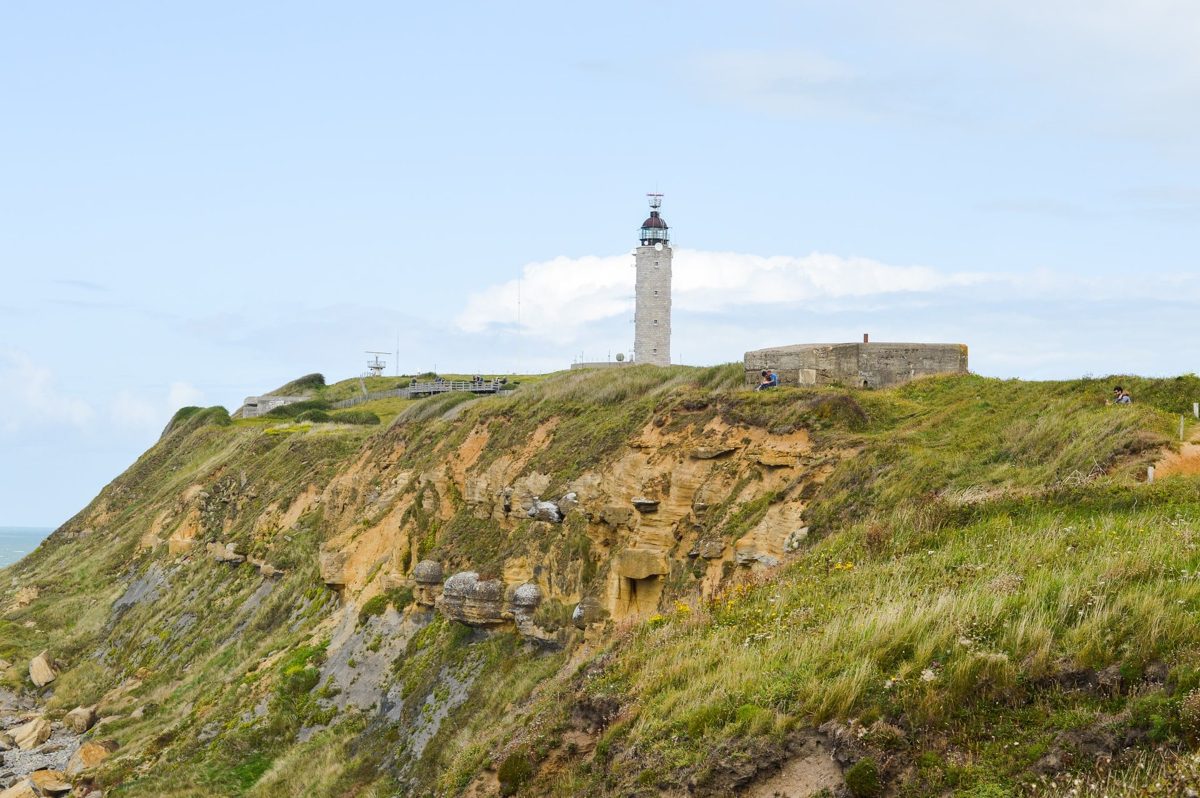
The Cap Gris-Nez lighthouse
Located on a military base, it's sadly impossible to visit. The lighthouse that towers over the Two Capes site is a must-see landmark of the coast and a favourite for tourist photos. The first building was destroyed in 1944. A temporary metal lighthouse was put up before the one we know today was brought into service in 1957. With a range of 29 nautical miles, it has been automated since 1986.
Standing 72 metres tall, the Centre Régional Opérationnel de Surveillance et de Sauvetage (the regional monitoring and rescue centre) sits at its foot.
The Walde lighthouse
The region's unusual lighthouse, which marks the boundary between the Channel and the North Sea. A construction unique in France, built in 1859 on metal piles, the structure supports a floor and a balcony, and up to three keepers could once live in a 5 m-wide dwelling. It stands more than 15 m above the sandbank and 11 m above the highest tide. Permanently switched off in 2001 and left abandoned, it's thanks to historic monument protection (granted in 2022) that it will be saved from destruction and renovated soon.
Today, beyond its heritage value (a record of the technical innovations of its time), the lighthouse is a must-see for tourists. Visitors come here to watch the many seals basking on the sandy banks off Marck, not far from Calais.
The Canche lighthouse
Located in Le Touquet-Paris-Plage, the lighthouse dates from the early 1950s. It has the peculiarity of standing more than 800 m from the sea, near the mouth of the Canche. This location is due to how dangerous the river mouth is. Many shipwrecks were recorded here before the first semaphores and lighthouses, dating from the 19th century, were built.
From its 57 m height, and after climbing its 274 steps, you'll enjoy a magnificent view over the resort and its surroundings. The octagonal brick and concrete tower has been a listed historic monument since 2011. Round off your visit with the exhibition held in the former keeper's house. You'll discover the old lights and the history of this landmark monument of the town. The guided tour is a chance to learn about and discuss how it works, and the history of the resort and the Canche estuary.
The Calais lighthouse
A landmark for ships returning to port, the Calais lighthouse has lit up the sky since 1848.
Standing 51 metres tall, and 58 metres above sea level, you'll climb no fewer than 271 steps to reach the balcony, which offers a 360° view.
Dressed all in white except for its black top, the Calais lighthouse is crucial for crossing the Strait of Dover, acting as an unfailing landmark for the many ships using this shipping lane. The lamp's beams have a range of 23 nautical miles, or 43 kilometres.
A visit to the lighthouse lets you discover (for free) all the tools needed for navigation and maritime signalling. Explanations, demonstrations, and even hands-on practice, thanks to the guides on site.
The climb (paid) will treat you to lovely panoramas over the port, the town, the tunnel, the boats and more. You'll find plenty of anecdotes about the lighthouse's history and how it has worked through the ages.
The Risban lighthouse
Here we are in Dunkirk, at the foot of the northernmost lighthouse in France. Its lantern, with a range of 26 nautical miles, or 48 kilometres, and its 276 steps taking you 63 metres up, make it a giant of the North!
The lighthouse has been a listed historic monument since 2011. It takes its name from the old fort (Risban, or Gros Risban) built by Vauban, on which it stands. Still in operation, the lighthouse was automated in 1985. Located in the port of Dunkirk, tours are organised every Sunday during school holidays and over the summer period (information and bookings: musée portuaire de Dunkerque).
Read next
 Thierry D
A word on this article?
No reviews yet. Yours will be the first.
The form is unavailable at the moment. Send your review to the editors, we’ll publish it here.