
News
The belfries of the Opal Coast | regional heritage
 Anne · 6 min read
A sign of a town's autonomy and independence in the Middle Ages, the belfry demonstrated the power of the town by rising higher than the lord's keep and the village church tower.
The oldest belfries were built as early as the 11th century. Recognised as a UNESCO World Heritage Site in 2005, these imposing buildings weren't merely decorative at the time: they told the time, but not the canonical hours that had until then been marked by church bells (matins, nones, vespers, and so on). The belfry also played a defensive role — most had a watchtower — allowing the townspeople to be warned of imminent danger. It could also serve as a prison, a meeting hall…
The belfries of Dunkirk
Built around 1440, the Saint-Éloi belfry is actually the bell tower of the church of the same name, located a few metres away. This separation dates back to the fire that ravaged the building in 1558 but spared its bell tower. A navigation landmark, a clock… the belfry has served many purposes over time. Today, the ground floor houses Dunkirk's tourist office.
An imposing square tower 58 metres high, built in yellow brick, its carillon dates from 1962. Made up of 48 bells, including Jean Bart — not the famous privateer, but the bourdon bell (which weighs more than six tonnes) — you can reach it easily by lift, which takes you up to the 5th floor. From there, you climb 65 steps to reach the panoramic terrace, offering an extraordinary view over the city.
📌 adults: €5
children: €3.50
The town hall belfry, meanwhile, is built in Flemish neo-renaissance style, dating from the 19th century, in brick and limestone, traditional local materials. The belfry offers a visit and a view over the town, the beach and the Flemish landscape not to be missed! Characteristic defensive features adorn the building, which is topped with a spire pierced with dormer windows.
The belfry of Bergues
This town, which gained huge media attention thanks to the film Bienvenue chez les Ch’tis, lies in the hinterland behind Dunkirk. Throughout its history, Bergues has suffered numerous periods of destruction and violent fires. Rebuilt and then fortified, Bergues won its independence in 1240, and the construction of its first belfry became the symbol of that. After a further fire completely destroyed the town in 1383, Bergues was rebuilt and the belfry was then raised again in a version almost identical to the one we know today. It was subsequently spared from fires, wars and other brutal occupations over the centuries, right up until September 1944. In that dark period, after holding out as a stubborn pocket of resistance, the Germans blew up the belfry along with the church tower as they withdrew.
Today, the belfry is the symbol of this tourist town. Built in yellow brick and concrete, it stands 47 metres tall. Listed as a Historic Monument in 2004 and as a UNESCO World Heritage Site in 2005, it now houses the tourist office, a music room and several exhibition spaces dedicated to local folklore.
To reach the bell chamber housing the carillon, you'll first have to suffer a little and climb 206 steps! But what a breathtaking view (if you've any breath left after the climb!). You can also admire all 50 bells, the largest of which weighs 1,500 kg, for a total of 6 tonnes. The carillon and its tunes ring out every hour (reuze lied) and every half hour (le mari complaisant), setting the rhythm of daily life for the town's residents.
📌 €3 entry
€1.40 for under-14s.
The belfry of Calais
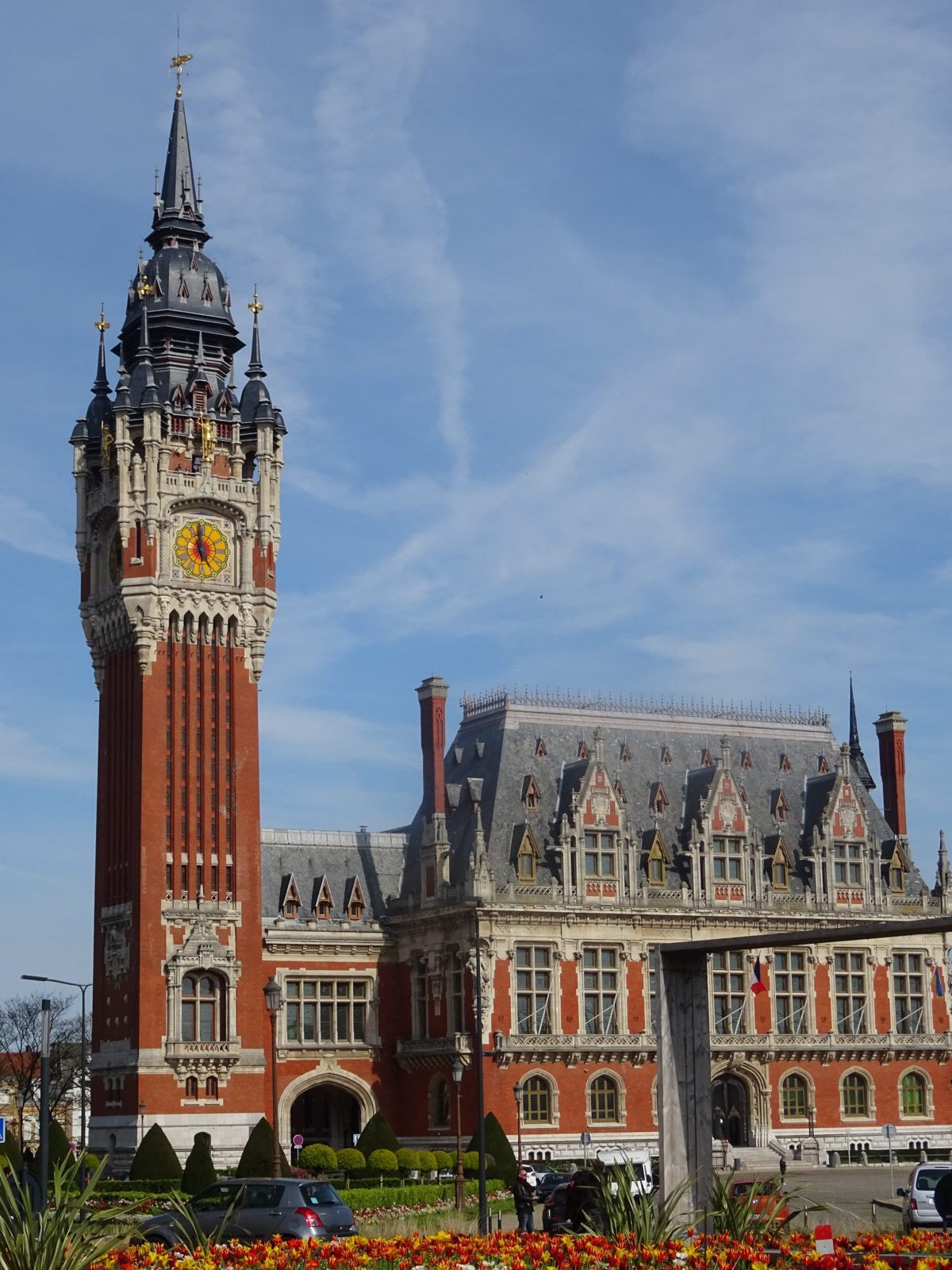
Standing 72 metres tall, the belfry of Calais towers over the port town. Built in red brick, it opened to the public fairly recently. Its architecture hadn't originally been designed to receive visitors, so the belfry underwent alterations in 2011 to turn it into a tourist attraction, offering an exceptional view over the beach, the town, and the harbour; and on a clear day, a view of the English cliffs. A lift takes you effortlessly to the top.
The top of the belfry, particularly ornate, features four clock faces and gilded sculptures of knights, displayed at the four cardinal points. A carillon plays the tune la gentille Annette by Boieldieu.
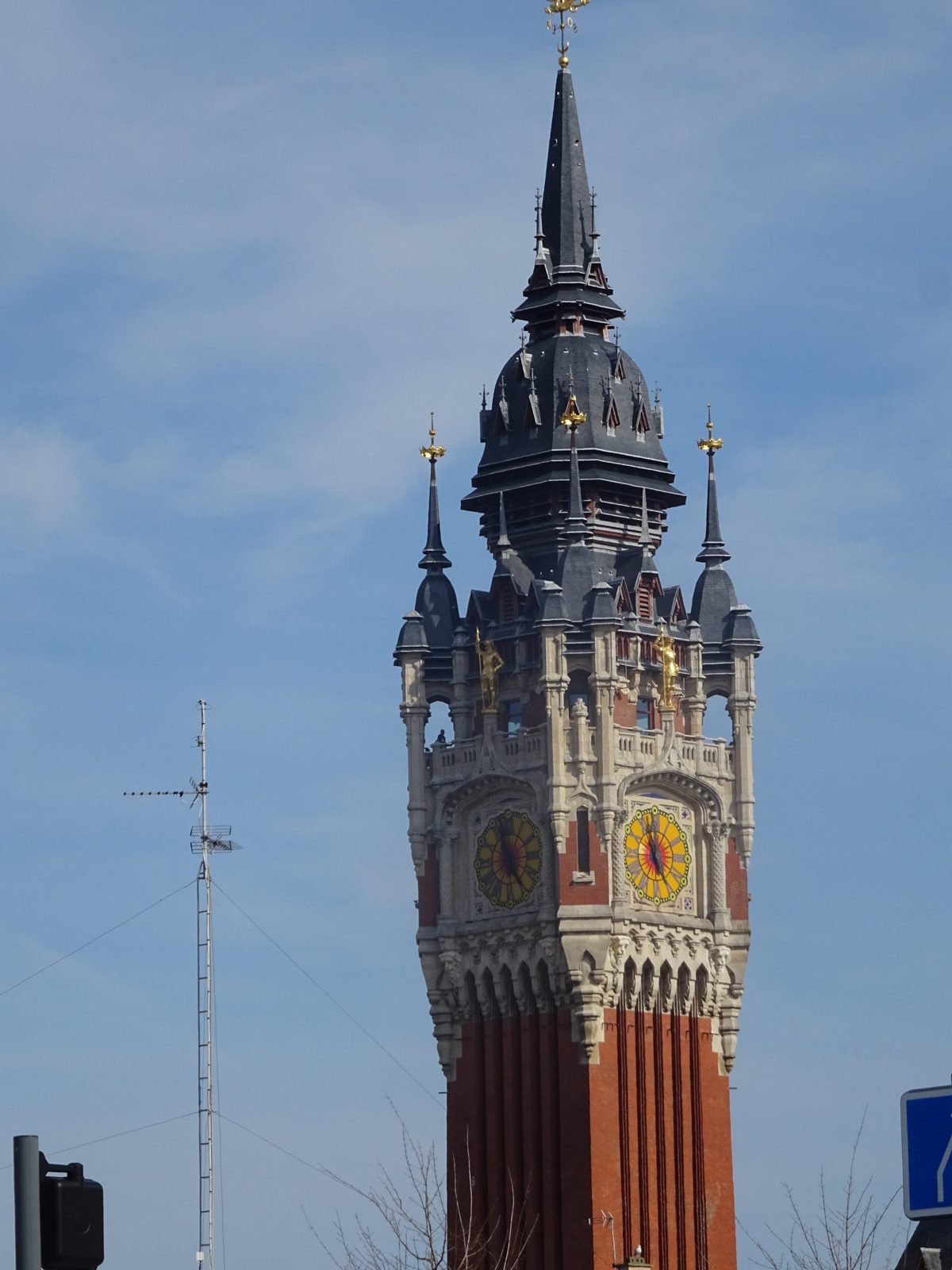
The Calais belfry is attached to the town hall, and its materials (red brick from Kortrijk and white stone) make it a typical monument in the Flemish neo-renaissance style. Its architect, Louis Debrouwer, born in Dunkirk, showed real innovation by using reinforced concrete to build the belfry, which was completed in 1923. The use of this material no doubt helped keep the façade almost intact during the Second World War. Calais nonetheless suffered heavy material and human losses as a result of the bombing.
📌 The belfry is open to the public every day from the start of April to the end of September, from 10am to midday and 2pm to 5.30pm
The belfry of Boulogne-sur-Mer
This imposing tower, 35 metres tall, is attached to the town hall. Its Romanesque style, in stone, sandstone and limestone, makes it a massive, imposing structure made up of two parts:
- A square tower dating from the 12th and 13th centuries for the lower section.
- An octagonal tower for the upper section, rising above the square tower. This tower dates from the 18th century and houses the clock mechanism.
The original section of the belfry reveals its first roles: keep of the counts of Boulogne, but also a storeroom, and thanks to its watchtower, the belfry is the protective symbol of the town
The great bell Estourmie still rings out the hours today for the people of Boulogne, and its oculus window can still be seen. A visit to the belfry and its museum (statues, furniture, stained glass, and more) makes for a highly informative walk.
📌price: €3
Open every day from 1 July to 31 August, from 10am to midday and 2pm to 5.30pm.
Standing alone or attached to a town hall, belfries are the pride of our towns and community life, marking the rhythm of everyday life to the sound of their tunes. A symbol of municipal freedom, they are part of the landscape of our region.
Preserved, restored, recognised as UNESCO World Heritage sites, belfries have plenty of good days ahead of them, with more and more tourists coming to visit the Hauts-de-France region, unafraid to climb their stairs to admire the extraordinary viewpoints and magnificent landscapes unfolding before their eyes.
Read next

A word on this article?
No reviews yet. Yours will be the first.
The form is unavailable at the moment. Send your review to the editors, we’ll publish it here.